A Public Debate Is Not a Poll of Everyone
A public debate is not a poll of everyone: learn how to read visible arguments without mistaking them for the views of an entire community.

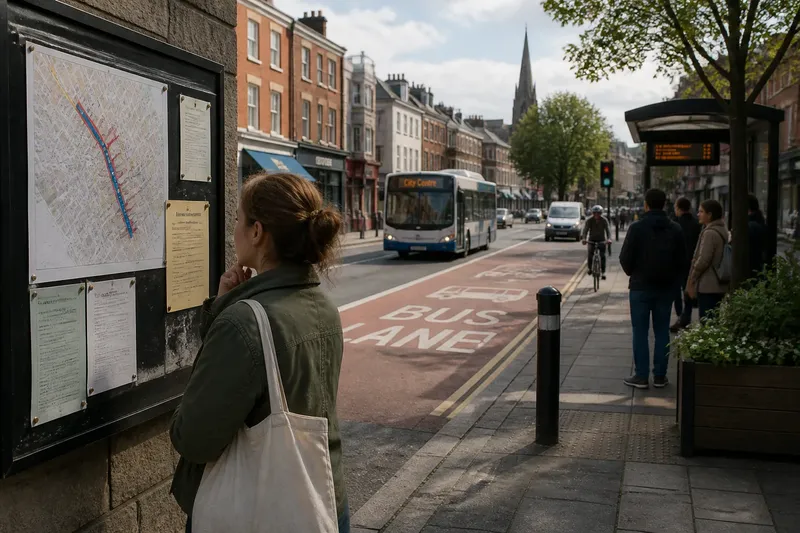
At a residents’ meeting, two neighbours argue over a proposed bus route while most chairs stay empty. By the next morning, their exchange may be the part everyone remembers. A public debate is not a poll of everyone, and visibility alone cannot tell you how the wider community thinks.
What does a public debate represent?
A public debate represents the views expressed by the people who took part, in the setting where they spoke. It can reveal reasons, concerns and competing values, but it does not automatically describe people who were absent or silent.
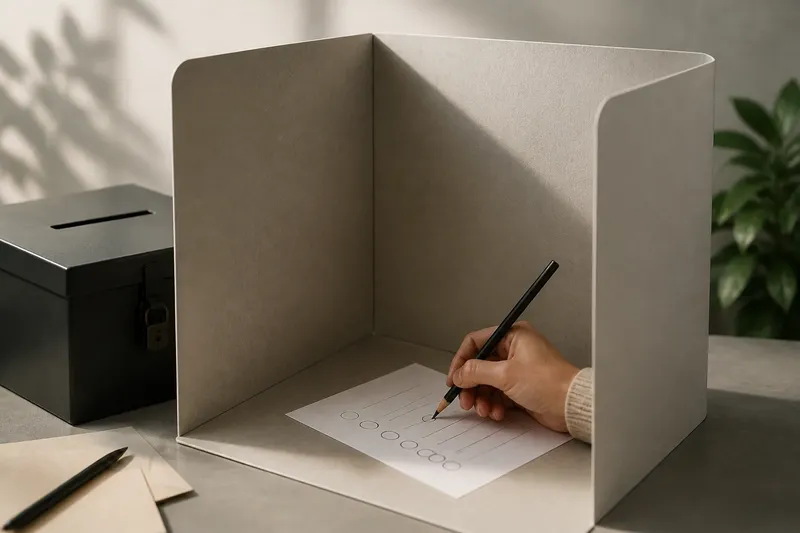
That distinction matters because a debate is a kind of public performance: people speak, respond and try to persuade. A poll, by contrast, asks a defined group for answers using a specified method. Neither is a complete picture of civic opinion, but they answer different questions.
Think of an open window: you can hear what is happening in one room, not every conversation in the building. A lively exchange may be sincere and useful while still representing only a slice of public life.
Why do some voices dominate?
People are more likely to speak when they have time, confidence, strong feelings or a clear route into the discussion. Meeting times, transport, caring responsibilities, language, disability access and familiarity with formal proceedings can all affect who gets heard.
The subject itself also shapes participation. A person who expects a proposal to affect their home or daily journey may speak readily; someone who is uncertain, less affected, or still weighing the options may remain quiet. Their silence does not tell you which of those explanations applies.
Organisers and media can amplify the imbalance by returning to the most forceful speakers, memorable phrases or dramatic disagreements. Repetition makes a view more visible, not necessarily more common.
Does silence mean agreement?
No. Silence can mean agreement, indifference, uncertainty, lack of access, reluctance to speak publicly or simply that a person was not asked. Without more information, it is unsafe to choose one interpretation and apply it to everyone who stayed quiet.
Imagine a council considering changes to a busy street. A fictional resident who cannot attend an evening meeting sends no comment; that absence might reflect a shift at work rather than approval or opposition. The observable fact is that the resident did not contribute through that meeting, not what they believe about the proposal.
For the same reason, applause, a show of hands or a packed room should be described precisely. Say what happened in that room, rather than turning it into a claim about an entire town.
How should reported opinions be read?
Start by asking who is speaking and how their views were gathered. A quotation from one campaigner, a meeting comment and a survey response are different kinds of evidence; none should be presented as interchangeable.
- Check the source: Is this an individual, an organised group, an elected representative or a set of respondents?
- Check the setting: Was the view expressed at a meeting, in a letter, online or through a structured survey?
- Check the wording: Does the report quote a specific concern, or claim that “the public” thinks something?
- Check the reach: Who had a realistic chance to contribute, and who may have been missed?
- Check the limits: Does the account explain what it can and cannot establish?
These checks do not dismiss a speaker. They keep the account honest about what the evidence supports. A clearly attributed minority view may deserve attention even when it says nothing about how widely that view is held.
Can a loud debate still matter?
Yes. A visible argument can expose a consequence that officials or other participants have overlooked. It can also clarify the values at stake, test an explanation and give people language for a concern they had not yet expressed.
Its value depends on how it is used. Treat the debate as a source of questions and reasons, then look for other ways to understand the wider public’s views if that is what a decision requires. Do not make one room carry a claim it cannot support.
What should a fair account say?
A fair account names the participants and the occasion, describes the views actually expressed, and avoids implying that attendance equals representation. If the source cannot show how common an opinion is, say so plainly rather than dressing a visible dispute as a public verdict.
Useful wording is often modest: “Several residents at the meeting objected to the proposed route,” or “The speakers raised concerns about access.” Such sentences tell readers what was heard without pretending to know what every resident thinks.
When someone claims that “everyone is saying” something, ask what that means in practice. Who spoke, where, and on what basis is the claim being made? Those questions can uncover whether the statement refers to a few vocal participants, an organised campaign or broader evidence.
Which questions clarify public debate?
Is a packed meeting representative?
Not by itself. A full room shows strong attendance among the people who came, but it does not establish how those attendees compare with people who did not attend.
Do social media comments show public opinion?
They show what users chose to post in that space, under its particular conditions. Without a clear method for reaching and hearing from a broader group, the comments cannot stand in for everyone.
Can one speaker represent a community?
Only if there is a clear basis for saying whom they represent and how that authority was given. A person can speak from lived experience or on behalf of an organisation without speaking for every neighbour or member.
What if the same view keeps appearing?
Repeated appearances may show that the view is organised, persistent or especially visible. To judge how widely it is shared, look for evidence gathered from a defined group and read how that group was reached.
How can readers use debate well?
When you hear a public argument, separate its substance from its reach. The speaker may offer a strong reason to reconsider a proposal even if you cannot tell how many people agree; those are two different judgements.
If you contribute, make the scope of your own claim clear. Describe your experience, explain whom you speak for if you have a mandate, and avoid presenting personal conviction as a community consensus. That precision helps decision-makers hear the point without mistaking its scale.
A public debate is not a poll of everyone; it is one part of how civic questions become visible. Listen closely to what people say, then be just as careful about what their presence, silence or repeated appearance does not establish. The best public account leaves room for unheard views instead of filling that gap with an assumption.